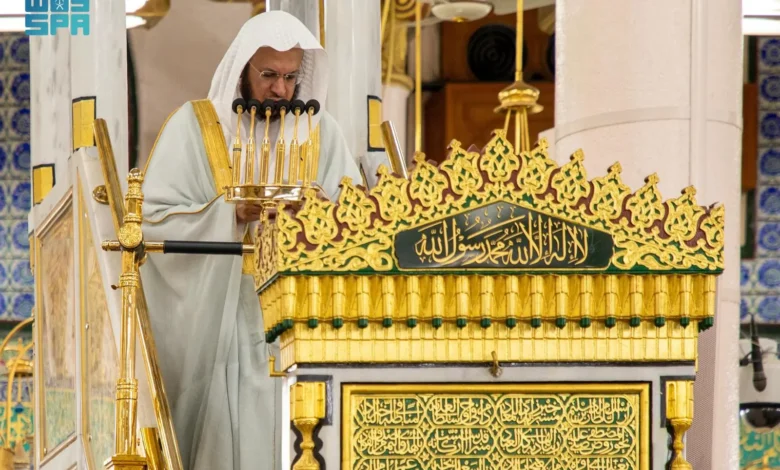
Madinah (UNA/SPA) – The Imam and Preacher of the Prophet’s Mosque, Sheikh Dr. Abdul Mohsen bin Muhammad Al-Qassim, urged people to seize the virtue of the first ten days of Dhul-Hijjah and draw closer to God by performing acts of worship, obedience, reciting the Qur’an, giving charity, and doing other good deeds, due to the virtue God has given to these ten blessed days and the great religious rituals they contain.
Sheikh Dr. Abdul Mohsen Al-Qassim explained in his Friday sermon from the Prophet’s Mosque today that God Almighty has distinguished between nights and days, and has bestowed upon His servants seasons of obedience, so that the believers may increase in their degrees. Among the virtuous days that God has elevated in status and magnified in importance are the first ten days of Dhul-Hijjah, as God swore by them - the Most High said: “By the dawn, and ten nights.” They are among the noble days of God, and the conclusion of the known months. Their days are better than the days of the last ten days of Ramadan. Citing the hadith of the Messenger of Allah (peace and blessings be upon him) about the virtue of these blessed days, he said: “The best days of this world are the ten days.” He also said: “What deeds done in any days are better than deeds done in these days?” They said: “Not even jihad?” He said: “Not even jihad, except in the case of a man who goes out risking his life and his wealth and does not return with anything.” (Narrated by Al-Bukhari)
The Imam and Khateeb of the Prophet’s Mosque explained that the first ten days of Dhul-Hijjah bring together the main acts of worship – prayer, charity, fasting, Hajj, and sacrifice. Among the most significant of these days is the Hajj to the Sacred House of Allah, one of the pillars of Islam and one of its great foundations, through which sins and transgressions are erased. The Prophet (peace and blessings be upon him) said: “Hajj wipes out what came before it” (Narrated by Muslim). It purifies the pilgrim from the filth of evil deeds. The Prophet (peace and blessings be upon him) said: “Whoever performs Hajj for the sake of Allah and does not utter obscenities or commit any sin returns as on the day his mother bore him” (Agreed upon).
He mentioned that the first ten days of Dhul-Hijjah include the Day of Arafah, the famous meeting place for Muslims, a noble day for Muslims, citing as evidence the hadith of the Messenger of Allah, peace and blessings be upon him, “There is no day on which Allah frees more slaves from the Fire than the Day of Arafah” (Narrated by Muslim), explaining that the Day of Arafah is a day of supplication, hope, humility, humility and submission to the One and Only God. Ibn al-Barr, may Allah have mercy on him, said: “The supplication on the Day of Arafah is answered in its entirety.”
Sheikh Abdul Mohsen Al-Qassim said that one of the two Eids of Muslims falls on the first ten days of Dhul-Hijjah, as it includes the Day of Sacrifice, the greatest and most sacred day before Allah. The Prophet (peace and blessings be upon him) said during the Farewell Pilgrimage in his sermon on the Day of Sacrifice: “Indeed, the most sacred of days is this day of yours” (Narrated by Ahmad). He added that it is the best and most prominent day of the rituals, and the most prominent of the rites of Islam are on it. It is the day of the greatest Hajj, about which Allah Almighty said: “And an announcement from Allah and His Messenger to the people on the day of the greatest Hajj” (Al-Imam Ahmad).
His Eminence continued, explaining that during the first ten days of Dhul-Hijjah, Muslims yearn for Hajj to the Sacred House of God. It is from God’s grace to His servants that He has only made it obligatory for those who are able, and that whoever intends to perform Hajj but is unable to will attain its reward. It is recommended to fast the first nine days of Dhul-Hijjah during the blessed ten days. An-Nawawi, may God have mercy on him, said: “It is strongly recommended.” He, peace and blessings be upon him, also said about fasting on the Day of Arafah: “It expiates the sins of the previous and coming year.” (Narrated by Muslim). It is better for the pilgrim not to fast, following the actions of the Prophet, peace and blessings be upon him.
The Imam and Khateeb of the Prophet’s Mosque explained that it is recommended to increase the remembrance of Allah during the first ten days of Dhul-Hijjah, in compliance with the words of Allah, the Almighty: “And let them mention the name of Allah on appointed days,” as the Prophet, peace and blessings be upon him, called for in his words: “So increase in them the remembrance of Allah, the Most High, and the Most Great.” (Narrated by Ahmad), explaining that absolute takbir is permissible at all times during the first ten days of Dhul-Hijjah, and restricted takbir is prescribed after the obligatory prayers, from the dawn of Arafah, and for pilgrims and others, until the afternoon of the last days of Tashreeq.
He stated that among the recommended actions during the first ten days of Dhul-Hijjah is reciting the Holy Book of Allah, as its reward is multiplied. Charity is one of the gates of happiness, and is best done during times of need and the most honorable times. During the days of sacrifice and Tashreeq, it is a physical and financial act of worship that Allah has linked to prayer, as He, the Most High, said: “So pray to your Lord and sacrifice.”
He explained that God Almighty urged sincerity in slaughtering, and that the intention should be for God alone, not for pride, hypocrisy, reputation, or mere habit. God Almighty said: “And their meat and their blood do not reach God, but what reaches Him is piety from you.” And “the Prophet - may God bless him and grant him peace - sacrificed two horned rams, slaughtering them with his own hand.” (Agreed upon)
Sheikh Abdul Mohsen Al-Qassim emphasized the status, sanctity, and inviolability of the Ancient House of God, explaining that it is part of His benevolence that He made the ten-day season a shared one for those performing Hajj and those excused. The pilgrim, with the grace of time, attains the honor of a place in the most beloved place to God, Mecca, by which God swore, and God sanctified it and blessed it with abundant and lasting goodness. He made it safe and free of fighting, and the birds are safe and not frightened, and the trees are not cut off, and the wealth whose owner is not known is not taken except by one who knows it. The Prophet, peace and blessings be upon him, looked at it and said: “By God, you are the best land of God and the most beloved land of God to God” (Narrated by Ibn Hibban).
His Eminence concluded the Friday sermon, explaining that the successful pilgrim is the one who spends his time during these blessed days in acts of obedience, stocks up on good deeds, exposes himself to the blessings of mercy, thanks his Lord for the continuous blessings, and prays for those who serve the pilgrims and Umrah performers. The servants strive diligently towards God, and they have no share of their journeys except in Paradise or Hell, and every hour of life that does not bring a person closer to his Lord distances him.
(is over)