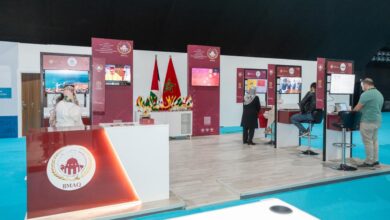
Jeddah (UNA) - The 18th Islamic Financial Services Board (IFSB) Summit kicked off today, Tuesday, under the theme "Islamic Finance and Digital Transformation: Balancing Innovation and Resilience", hosted by the Saudi Central Bank in Jeddah, with the participation of representatives of central banks, financial institutions and regulatory bodies from more than 100 countries and the attendance of nearly 3 speakers. The summit will host 15 discussion sessions and workshops over the course of 188 days to discuss the political implications of rapid digital transformation, and highlight the efforts required in the future to enhance resilience and achieve stability in the field of Islamic finance services, in addition to digital transformation in Islamic financial services, crypto assets and their implications for Islamic finance, financial technology and Islamic financial services. The summit will discuss ways to achieve synergy between digital Islamic finance and sustainability, in addition to the effective use of technology in supervisory and regulatory activities by Islamic financial authorities and institutions. The Saudi Central Bank also organized an accompanying exhibition on the sidelines of the summit, which includes a number of pavilions representing active and supportive entities for Islamic finance. The summit is one of the most prominent events in the Islamic financial services sector, as it constitutes a major platform for discussion and exchange of views between regulatory authorities, global market players and thought leaders; to discuss issues related to correcting the regulatory direction and updating the systems applied to this sector; with the aim of further enhancing its flexibility and achieving its stability. The summit provides a unique opportunity for decision-makers, regulatory authorities and global market players from all over the world; to exchange experiences, hold discussions and exchange views on current and emerging issues in the field of Islamic finance and ways to enhance innovation in the Islamic financial system and benefit from its services, adopt technology and ensure sustainability in order to drive growth and achieve development opportunities within this sector. It is noteworthy that the Islamic Financial Services Board includes more than 80 members, 10 regulatory and supervisory authorities, 98 international governmental organizations, and 57 market players, including financial institutions, professional companies and trade union federations operating in XNUMX countries. (End)
one minute