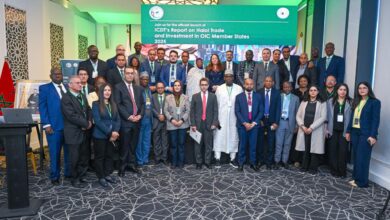
Ramallah (UNA) – A World Bank report entitled “The Trade Potential of the Palestinian Economy” recommended removing Israeli obstacles imposed on the Palestinian economy, especially at the crossings that limit the freedom of movement of goods and individuals, which prevents the improvement of the Palestinian economy. The results of the report were reviewed during a workshop at the headquarters of the Ministry of National Economy in Ramallah today, Wednesday, with the participation of Minister of National Economy Abeer Odeh and World Bank Country Director Marina Wes, in the presence of representatives of the public and private sectors in Palestine. The report stressed a set of measures that can be taken in the short term, including the need to review the current commodity lists and work to expand them to meet the needs of the Palestinian economy, in addition to reviewing the lists of multi-use materials, some of which are prohibited from entering Palestinian markets, which negatively affects the performance of the Palestinian economy. The report stressed the need to facilitate trade through the Karameh crossings (between Palestine and Jordan) and Kerem Shalom (between the Gaza Strip and Israel), in a way that meets the needs of importers and traders. It also pointed to the long-term measures that require replacing the Paris Economic Protocol with a free trade agreement. At the same time, he pointed out the policies and procedures of the Israeli occupation that limit real growth in the Palestinian economy. Minister Odeh said: The restrictions imposed by the occupation and its failure to implement the provisions of the Paris Protocol prevent the existence of an independent Palestinian trade system that is consistent with our long-term economic interests. She pointed out that according to the World Bank's analysis of the Palestinian trade situation, the occupation's procedures and policies limit the private sector's potential to benefit from effective integration into the multilateral trading system, and stand in the way of implementing the Palestinian government's policies and strategies aimed at maximizing Palestinian exports and attracting investments, which would enable it to confront unemployment and poverty rates in Palestine. Minister Odeh explained that the analysis conducted by the World Bank clearly shows the harmful effects of the occupation's restrictions on the Palestinian economy and trade, and provides very tangible and applicable recommendations on how to improve the situation in the short term. She stressed that developing an independent trade system that is consistent with Palestine's long-term economic interests is one of the goals of the Palestinian government embodied in the National Policy Agenda (2017-2022). Awda said that one of the ministry’s priorities in the next phase is to adopt a Palestinian trade policy as a means of building the foundations of the Palestinian economy and achieving the strategic goal of reducing dependence on the Israeli economy, in accordance with the sectoral strategy for developing the national economy. (End) Khaled Al-Khalidi / S.G. / H.S.
one minute