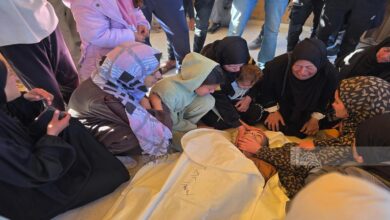
Kuala Lumpur (UNA) – Leaders of global religious diversity called on governments and religious leaders around the world to condemn the war of genocide, starvation and destruction in Gaza, and to intervene immediately and urgently by all means and capabilities to stop this massacre, and to exert pressure on the Israeli occupation government to stop this humanitarian catastrophe. They stressed that this tragedy, which has shaken the human conscience, would not have occurred had it not been for the absence of effective international law and international humanitarian law, including the activation of international accountability mechanisms.
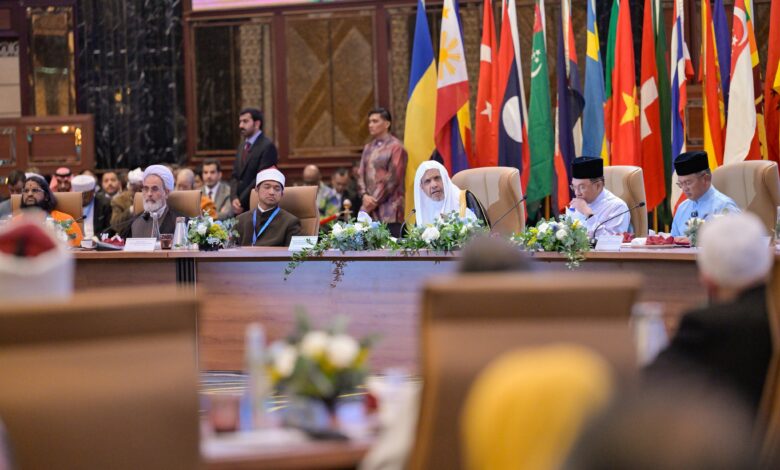
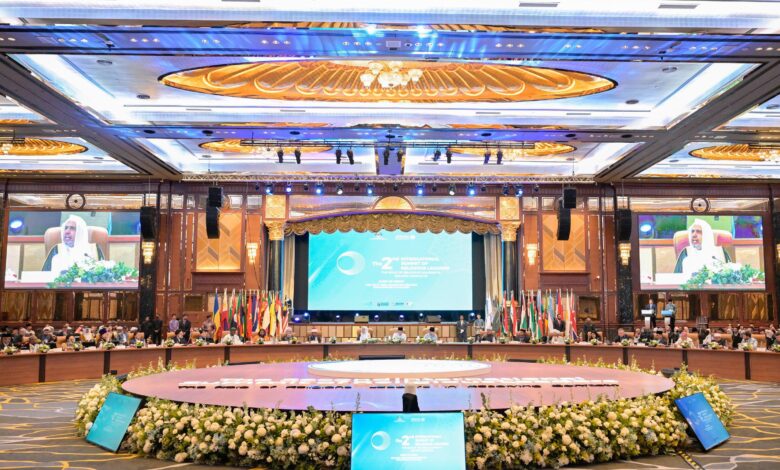
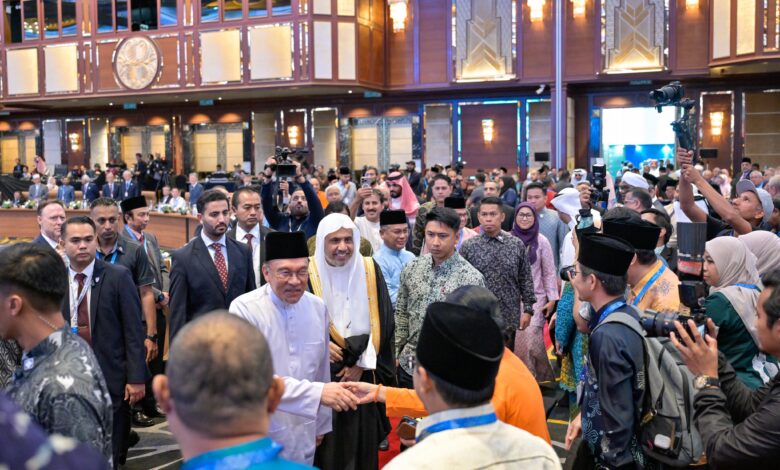
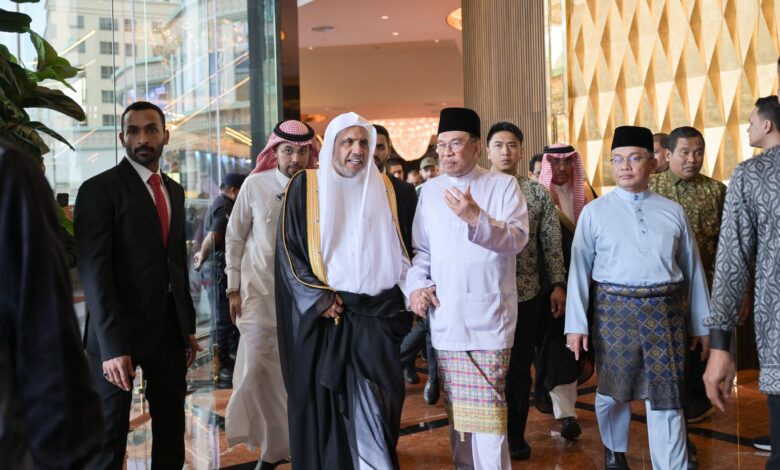
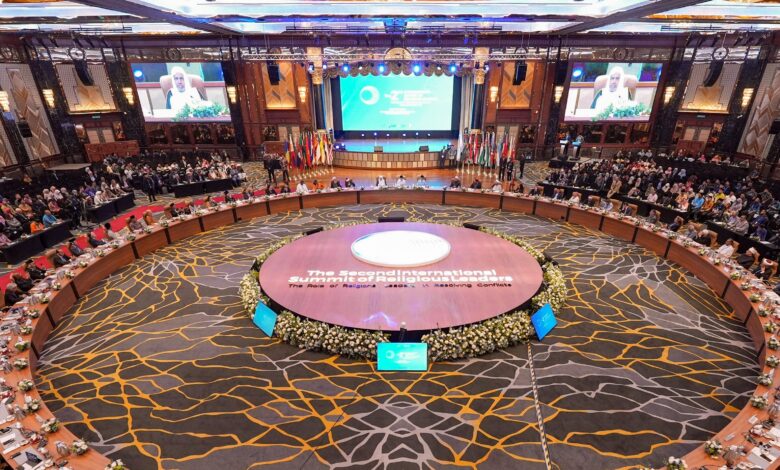
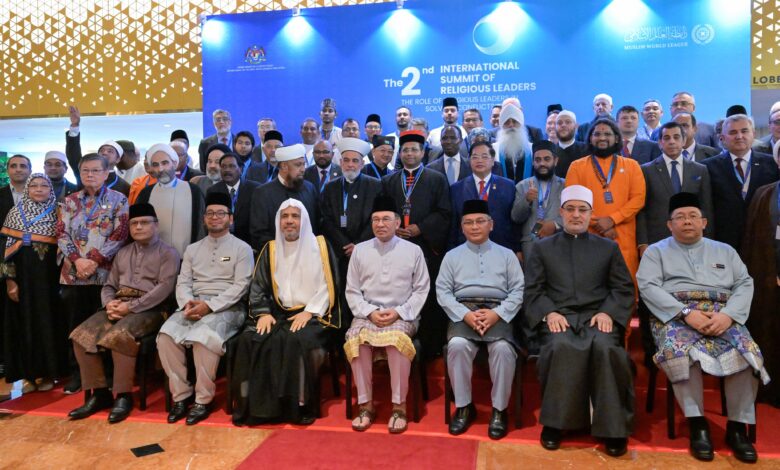
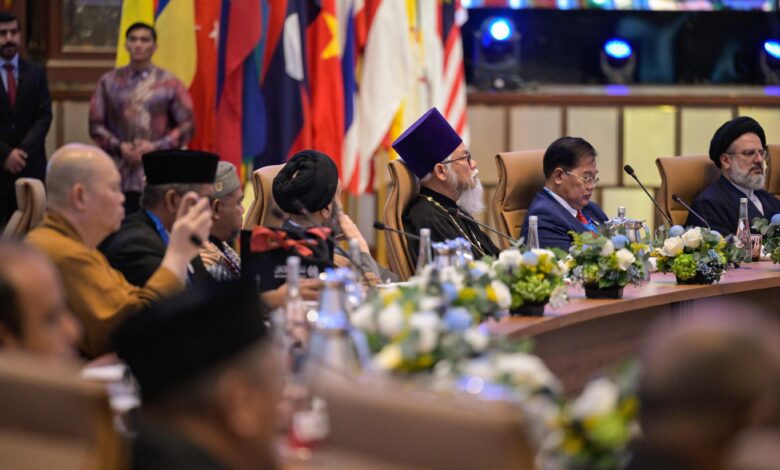
This came at the conclusion of the Second International Religious Leaders Summit, “The Role of Religious Leaders in Conflict Resolution,” which was organized in the Malaysian capital, Kuala Lumpur, by the Malaysian Prime Minister’s Office in cooperation with the Muslim World League. The summit was inaugurated by the Prime Minister of the Kingdom of Malaysia, Mr. Anwar Ibrahim, accompanied by the Secretary-General of the League and Chairman of the Muslim Scholars Association, His Eminence Sheikh Mohammed bin Abdul Karim Al-Issa, with the attendance and participation of 400 prominent religious leaders from around the world.
In their statement, the religious leaders urged the international community to pressure the Israeli occupation government to abide by the dictates of international and human rights treaties and covenants, and to work to end the suffering of the Palestinian people, ensure their legitimate rights, and establish their independent state in accordance with relevant international resolutions.
In this context, they stressed their support for the final document of the high-level international conference on settling the Palestinian issue through peaceful solutions and implementing the two-state solution, at the ministerial level, which was sponsored and chaired by the Kingdom of Saudi Arabia in partnership with the French Republic, at the United Nations headquarters in New York. They expressed their determination to harness all their spiritual and societal influence to mobilize political and diplomatic support for the document in their countries and across the regions to which they have influence.
The religious leaders affirmed their sincere determination to provide an ethical framework that would contribute to resolving the successive conflicts that have undermined the universal values of humanity and fueled division and hatred.
In his address at the opening session of the summit, Malaysian Prime Minister Anwar Ibrahim welcomed the summit's participants, leaders of global religious diversity, expressing his deep gratitude and appreciation for their commitment to peace, justice, and humanity.
The Malaysian Prime Minister emphasized that all religions seek to enhance humanity, adding: “Yes, there are differences. I am a Muslim, I practice Islam, but I also know that in Islam we speak of mercy for the worlds, meaning mercy towards all to maintain the balance and moderation stipulated in the middle nation. I also know the meaning of ‘let you know one another,’ which does not only mean tolerance, but also signifies a deeper understanding of learning and comprehending the nature of differences.”
He stressed the need for all followers of religions to unite against those who reject the universal values of humanity, calling on all leaders of religious diversity to defend the essence of humanity.
The Malaysian Prime Minister warned against the dangers of theories of clash and conflict, such as the "clash of civilizations" theory, which claims that a clash is inevitable, explaining that the clash is, in reality, a clash of ignorance, not a clash of civilizations.
He stressed that the situation in the Gaza Strip is painful, pointing out that the crisis in the Strip has shown that the international community has lost its enthusiasm and passion for justice and humanity. For the past fifty and sixty years, we have been fighting colonialism and the exploitation of man by man, but Gaza is an example of this. Every day, we witness the killing of children, and the bombing of homes and people. His country asked: What does religion teach us, and where is the voice of conscience that stems from our faith and moral values?
For his part, His Excellency the Secretary-General of the Muslim World League, Sheikh Dr. Mohammed Al-Issa, welcomed the summit participants, emphasizing that it is being held at an exceptional stage in our contemporary history, one marked by a proliferation of tragedies and challenges that have impacted our global order and its international legitimacy.
His Excellency stressed that peace in our world is not just an option, but a necessity related to its existence and the credibility of its international charter, in which the peoples of the United Nations pledged on June 1945, XNUMX, to save succeeding generations from the scourge of war, which twice in our lifetime has brought untold sorrow to humanity. They also pledged to respect the obligations arising from treaties and other sources of international law, and to live together in peace and good neighborliness.
He added: “We meet with a realization of the vital role of religious leaders in influencing the conscience of religious believers around the world, who represent approximately 80 percent of the world’s population. Their spiritual influence is of paramount importance in promoting universal human values and principles, and in protecting ideas from the influence of any concepts of extremism, violence, and terrorism, especially in the environments in which they live and thrive, foremost among which are the concepts of hatred, racism, discrimination, and exclusion.”
Al-Issa explained that the summit aims to challenge religious diversity leaders to the credibility of their call for universal human values.
He also explained that the summit is being held to emphasize that spiritual authorities are not merely concerned with mere preaching, but are required to be active players in peacemaking by guiding their followers from their spiritual perspective to the centrality of human dignity in accordance with their universal principles.
His Excellency emphasized that the principles in which we believe are not slogans, statements, or appeals issued on occasional occasions. Rather, they are a permanent covenant embodied in our discourse, translated into our behavior in word and deed, and promoted by spiritual institutions as “education and motivation,” to prove that true religious values protect virtue in all its meanings.
He pointed out that the lessons of history have taught us that peace in our world must be based on awareness that conflict and struggle only generate evil that affects everyone, and that its makers, even if initially tempted by the glitter of victory, ultimately return disappointed, leaving behind a stigma of shame that blackens the chapters of their history, as is the power and penetration of divine justice and its profound wisdom.
The Secretary-General of the League expressed his deep concern about the wars and conflicts taking place in the international arena, which threaten the security of the world and the stability of its societies. He pointed out that the genocide and famine taking place today in the Gaza Strip, before the eyes and ears of the international community, is a dangerous precedent in the principles of human rights, the likes of which our world has not witnessed since the issuance of the Universal Declaration of Human Rights. Unfortunately, this calls into question the credibility of international legitimacy due to the failure to adhere to its solidarity charter, thus threatening the cohesion of its nations, which have declared their unity to support just causes, in compliance with their historic charter.
He emphasized that experience has proven that leaders of religious diversity have an effective impact on practicing religious diplomacy, which is creative diplomacy, through dialogue, mediation, and reconciliation. This is due to their significant assets, stemming from their spiritual stature, which enables them to contribute to defusing crises, particularly by educating their followers about preventative behavior. His Excellency emphasized that these roles are not an alternative to political processes, but rather a supportive tributary to them.
In this spirit, His Excellency the Secretary-General of the League announced two initiatives. The first aims to activate the spiritual and moral role of leaders of religious diversity around the world to contribute to efforts to achieve peaceful resolutions to conflicts, based on their spiritual influence in religious communities and peoples.
In this regard, Al-Issa affirmed that the League will work to complete the development of sub-initiatives for this initiative, which supports and backs peace efforts. He explained that the League has embarked on this through one of its most important pillars, the “Building Bridges of Understanding and Peace between East and West” initiative, hosted by the United Nations in New York on June 2023, XNUMX.
The second initiative, as announced by the League's Secretary General, was to protect minorities in countries with religious, ethnic, and cultural diversity, ensuring their legitimate rights, freedoms, and well-deserved dignity, given the marginalization many of these minorities suffer, particularly due to the issuance of laws targeting their religious identity. It also proposed coexistence programs and supportive legislative frameworks for these minorities in their homelands, including the wise handling of deviations from the civilized principles of their national constitutions, through the issuance of some extremist laws.
Five academic sessions were held during the summit. The first discussed the topic of conflicts with a religious dimension: deconstructing the causes and addressing the paths. The second examined the role of religious diversity leaders in confronting manifestations of violence and calls for conflict. The third reviewed the topic of religious diplomacy and the supportive contribution to efforts for just and peaceful settlements. The fourth session addressed the issue of exchanging expertise and successful experiences in managing religious diversity. The fifth discussed the topic of “The Gaza Tragedy: A Mirror of International Impotence and the Falsification of Human Values.”
The final statement of the summit included support for the contents of the two historic documents: (The Makkah Document) and (The Document on Building Bridges between Islamic Schools of Thought), issued by the Muslim World League with the consensus of Muslim scholars from their universal destination in Makkah Al-Mukarramah. The two international conferences of these documents were generously sponsored by the Custodian of the Two Holy Mosques, King Salman bin Abdulaziz - may God support him - for they contain solid principles and pivotal foundations for establishing the values of coexistence and tolerance among followers of religions and cultures, and for devoting a conscious civilized discourse that embodies the culture of moderation, confronts practices of injustice, conflict, and absolute, unjustified hatred, and calls for expanding the horizons of acquaintance, cooperation, and benefit on the basis of common humanity and noble values.
In their joint statement, the participants recommended the formation of a standing committee for the summit, comprising representatives from the Malaysian Prime Minister's Office and the Muslim World League. This committee will undertake early preparations for the Third International Summit of Leaders of Religious Diversity and develop a roadmap that envisions ways to overcome the challenges and dangers facing human societies from a spiritual perspective.
The conference participants adopted the Muslim World League's initiative aimed at activating the spiritual and moral role of religious diversity leaders by contributing to peaceful resolutions to conflicts and leveraging their influence in religious communities and peoples.
They also adopted the League's initiative on the protection of minorities in countries with religious, ethnic and cultural diversity, as detailed in the above-mentioned statement of His Excellency the Secretary-General.
The participants thanked the Malaysian Prime Minister and the Muslim World League for their cooperation in making this summit a success, expressing hope that the next summit would be held under better international conditions.
(is over)